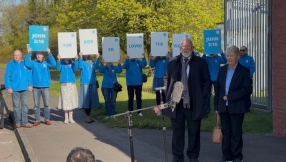
The Terminally Ill Adults (End of Life) Bill died a natural death on Friday when it ran out of parliamentary time.
The House of Commons voted in favour of the controversial measure, however the bill became bogged down in the House of Lords due to serious concerns about the lack of effective safeguards.
Critics were concerned that vulnerable people, such as the elderly, disabled and mentally ill could be pressured to end their lives. Further concerns were raised that victims of domestic abuse or veterans struggling with a return to civilian life may also end up using the scheme to end their lives.
The bill was proposed as a private member's bill by Labour MP Kim Leadbeater. Traditionally the House of Lords does not block or impose strenuous delays on measures proposed by the government in order to keep their manifesto promises. Assisted suicide however was not in the Labour manifesto and the government itself is divided on the issue.
While Prime Minister Keir Starmer voted in favour of the bill, his own Health Secretary, Wes Streeting, voted against, citing concerns that the NHS would struggle to provide what would amount to a whole new service.
24 April was the last day of time allocated to debating the bill in the current parliamentary session. The only way the measure could become law now is if it is reintroduced during the next session of Parliament, which begins in May.
This would essentially mean beginning from scratch and having to pass through the Commons again, something recent research has suggested is far from guaranteed.
During the bill’s time in the Lords over 1,200 amendments were tabled, a figure which is believed to be a record for a private member's bill.
Baroness Grey-Thompson, a former Paralympian and opponent of the bill, told the BBC that the proposed law is “poorly written”.
"It was written in haste and there are so many gaps in it that a number of peers are really uncomfortable with this particular bill, even though they may be in favour of the principle," she said.
Recent polling of the general public showed similar concerns. While belief in the principle of allowing assisted suicide appears to be quite strong, support for the bill is low due to concerns about the lack of effective safeguards.
Catherine Robinson, spokesperson for Right To Life UK, said it was "good news" that the bill has fallen.
"The House of Lords deserves immense gratitude for doing exactly what it is there to do: carefully scrutinising legislation," she said.
"As confirmed by the House of Lords Constitution Committee, it had no obligation to pass the Bill, which was not in the Government’s election manifesto and only narrowly passed in the Commons."
However, she warned that the battle is not over yet as supporters of the bill are planning to bring it back.
"From here, the assisted suicide lobby has made it clear that it is going to attempt to take the inappropriate and unprecedented route of bringing back the assisted suicide bill in the next parliamentary session and then use the Parliament Acts to bypass the House of Lords to force the bill into law," she said.
"So we can expect a large battle over the coming weeks to ensure that the assisted suicide lobby is not able to take this route, and not able to bring back the Leadbeater bill.
"If we can stop that next step, the Leadbeater assisted suicide bill will be finished."
New polling has suggested that in the event it is brought back, more MPs would oppose it than back it. The polling, which was carried out by Whitestone Insight, found that only 41% of MPs surveyed would vote “Aye” again, while 45% said they would continue to vote no.
Caroline Ansell, director of advocacy and policy at Christian policy group, CARE, said the failure of the bill to pass - coming so soon after the defeat of a similar bill in Scotland - was "a good outcome".
"What came across clearly in the debates on the bill, especially in the Lords, is that legalising assisted suicide would be a highly dangerous move for so many people," she said.
"As Christians, we believe that every human being has intrinsic dignity because we are all made in God’s image. The right approach to help the sick, the frail and the dying is to ensure that gold-standard health, social and palliative care is available at the point of need.
"Our work, then, carries on, both to resist fresh attempts to legalise assisted suicide and to apply pressure on the government to do more to fund palliative care provision and address the shortfalls in health and social care."