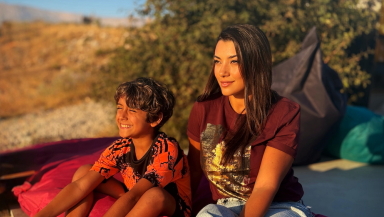
This Mother’s Day in Lebanon arrives during a time when many families are once again navigating uncertainty. Recently, I found myself preparing for a team meeting while also checking the news … and making sure my son felt safe at home.
For many mothers who lead teams or organisations here, the reality of leadership often includes this quiet tension that is rarely visible from the outside.
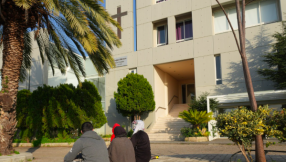
Across Lebanon, conflict has intensified in recent months, with authorities reporting that nearly 700,000 people, including 200,000 children have been displaced. Families are sheltering with relatives, in churches, and in schools. For those of us who remain and who continue to work, the backdrop to every meeting, every decision, every ordinary moment is the knowledge that life here is fragile. Living with the unpredictability of each day carries its own exhaustion, mental, emotional, and spiritual.
One mother from southern Lebanon, forced to flee her home, captured this tension: "The hardest thing is leaving, not knowing what to take or if you will ever return." Another, from across the region, wrote to us: "My heart is with every mother in this war." That solidarity and shared weight is something every mother here understands.
And yet, we keep going.
Our days begin like any other leader's. There are decisions to make, people to support, and strategies to move forward. Yet in the background, the weight of a world that feels increasingly unstable presses in. A small voice asks the simplest of questions: "Are we safe?"
In moments like these, leadership takes on a different meaning. It becomes less about authority and more about presence. Less about control, and more about courage.
Leadership in difficult environments builds something powerful: resilience. Resilience is choosing to keep leading, supporting your team, and moving the mission forward despite the obstacles you face.
As mothers who lead, we carry two worlds at once. We shoulder both the professional world where teams depend on us, and the tender world of our children, who look to us to know that everything will be alright. In these moments, we are not just mothers or managers … we are the first theologians our children will ever meet.
Our children are watching. They are learning not just from what we say, but from how we respond when life feels uncertain. They are discovering that courage does not mean the absence of fear, but the decision to keep moving forward with faith.
As a Christian, I hold on to the reminder that leadership was never meant to be sustained by our strength alone.
"God is our refuge and strength, an ever-present help in trouble." (Psalm 46:1)
In difficult seasons, leadership becomes an act of trust. Trust that our work still matters. Trust that hope is stronger than fear. Trust that even in unstable moments, God is still present and still at work. As one Lebanese believer put it simply: "Without having faith and hope, we would have been lost long ago."
I think of the mother in Iran who wrote: "I have invested my strength and years into building our home" and who, despite everything, has not stopped caring, not stopped praying, not stopped hoping.
This Mother's Day, I want to speak to every mother who is leading a team, a household, a congregation, or simply navigating difficulty.
Your enduring strength matters more than you know. The way you hold steady, the way you keep going, the way you point your children and colleagues towards hope, that is not a small thing. That is a profound act of faith.
Sometimes the most powerful leadership is simply showing up with faith, love, and steady courage … even when the world around us feels like it’s falling apart.
Marianne Awaraji is a Christian leader based in Lebanon, where she works with SAT-7 ARABIC as their Audience Relations Manager as well as a presenter. She speaks and writes on faith, leadership, and resilience in the Middle Eastern context.