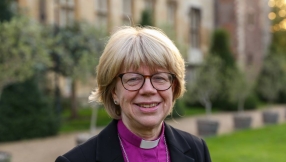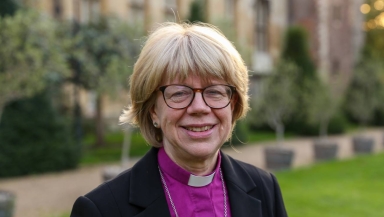
Dame Sarah Mullally has used her first Easter Day sermon as Archbishop of Canterbury to renew calls for peace in the Middle East.
She said that "violence, division and insecurity are affecting the lives of billions of people around the world" and that "many feel that their heart is in pieces".
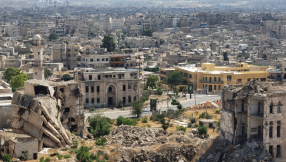
"The bereft, the wounded, the refugee. This week our gaze and our prayers have been turned towards the land where Jesus was crucified and raised from the dead," she said.
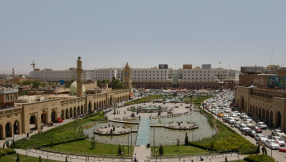
"Today, as we shout with joy that Christ is risen, let us pray and call with renewed urgency for an end to the violence and destruction in the Middle East and the Gulf.
"May our Christian sisters and brothers know and celebrate the hope of the empty tomb – and may all people of the region receive the peace, justice and freedom they long for."
Dame Sarah drew parallels between the darkness that surrounded the Resurrection before the dawn broke, and the reality of darkness in life, but reminded people that before the stone was even rolled away "the work of God was already unfolding in the dark".
"God's most essential work of resurrection happens in the depths of the earth, while the world is silent and still dark," she said.
"It sometimes feels like society conditions us to be impatient with the dark. We are taught to equate the light with progress and positivity, and the darkness as a space of absence or a delay to be overcome.
"Yet, for me darkness is also a place for the movement of the Spirit, knowing Jesus is with me."
In his Easter Urbi et Orbi, Pope Leo appealed to world leaders to choose “not to dominate others, but to encounter them”, and said he would be leading a prayer vigil for peace on 11 April in Saint Peter's Basilica.
“Let those who have weapons lay them down,” he said, as he warned that the world was “growing accustomed to violence” and that there was the danger of an “ever-increasing ‘globalisation of indifference’”.
“We cannot continue to be indifferent,” he told tens of thousands of pilgrims gathered in St Peter's Square. “We cannot resign ourselves to evil!”
In his Easter message, Prime Minister Sir Keir Starmer paid tribute to churches and Christian communities that "quietly and tirelessly support families, children and neighbours - offering comfort, bringing people together, and standing alongside those who need it most".
"It is precisely that spirit of service which exemplifies national renewal, and reflects the very heart of Christ’s example," said Starmer, who is an atheist.
"This Easter comes at a time of real anxiety for many people. Conflicts abroad, pressures at home, and uncertainty about the future weigh heavily on families and households," he said.
"In moments like these, faith offers reassurance and grounding - a reminder that we are not alone, and that hope can still take root even in difficult soil."
He said the government was keen to partner with churches to strengthen local communities and "build a country that is more resilient, inclusive and connected".
"Our country is at its best when we choose community over division, kindness over indifference, and service over self‑interest," he said.
"I thank everyone who gives their time through churches and Christian charities, and wish Christians across the UK and around the world a very happy Easter filled with peace, hope and the promise of new life."