The Archbishop of Canterbury and Jerusalem Church leaders have used their Easter messages to remember all those impacted by war.
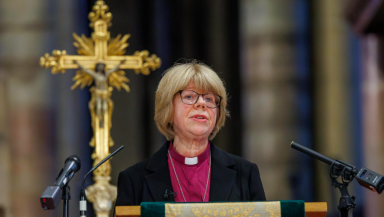
In her statement, Archbishop Sarah Mullally, said that the message of the gospel is not an abstract hope but a “living reality” that could give strength and comfort to all of humanity, particularly those who are in deep suffering.
She said, “We proclaim it in a world marked by deep suffering and conflict. We think of those living amid war and violence – across the Middle East, in Ukraine, in Sudan, and in so many other places of conflict – and of the churches of the Holy Land, bearing faithful witness under immense strain.
"We remember all who are displaced, oppressed, or forgotten, and we renew our calling as Christians to stand with the marginalised and to serve those most in need.”
She added that Jesus is not “distant” from human pain, but took it on himself: “Suffering and pain are penultimate; ultimate is the loving embrace of God in glory. Easter proclaims that even in the darkest places, God is at work bringing life.”
The Bishop of the Diocese of Cyprus and the Gulf, Sean Semple, noted that Easter was taking place this year "in the shadow of war" and said that the conflict "wounds our compatriots, livelihoods, political alliances, and creation itself".
He said that the cancellation of traditional Easter events in Jerusalem and the indefinite closure of the Holy Sepulchre were "spiritual wounds inflicted on the Christians of the Land of the Holy One, and all pilgrims".
In their own Easter message, the Jerusalem Patriarchs lamented the latest outbreak of Middle Eastern hostilities as a “relentless cycle of death, destruction and frightful suffering that now ripples across the globe in rising economic hardship”.
However, they also reminded the faithful that the core lesson of Easter is that even death is not the end, but that “by the power of God, Christ rose victorious from the grave, bursting the bonds of sin and death”.
The Patriarchs called on Christians everywhere to pray for the relief of those suffering from the impact of war, wherever they may be, while Mullally reminded believers to continue to demonstrate the love of Christ in their everyday lives.
“In prayer, in friendship, in hospitality, in shared witness … these small and faithful acts are seeds of a greater harvest, signs of the deeper unity we already share in Christ," said Mullally.