The ongoing conflict in the Middle East has forced changes to be made to key Christian events in Jerusalem this Easter.
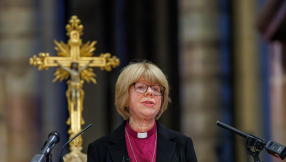
The Latin Patriarch of Jerusalem, Cardinal Pierbattista Pizzaballa, said that the conflict had already led to the cancellation of the traditional Palm Sunday procession into Jerusalem.
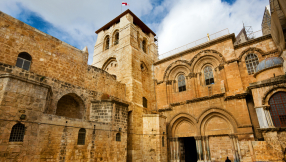
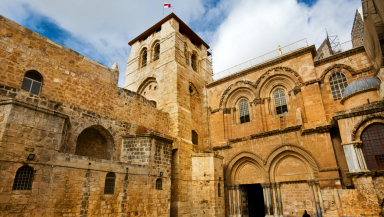
Lamenting the “loss of the community journey”, the Cardinal added that other key Easter celebrations centred in Jerusalem and the Holy Sepulchre - which he described as “the beating heart of our faith” - were also now in doubt.
“The restrictions imposed by the conflict and the events of recent days do not bode well for any imminent improvement," he said.
"In constant dialogue with the competent authorities, together with the other Christian Churches, we are evaluating how, in the ways to be agreed upon, we can celebrate the central mystery of our salvation in the heart of our Churches.”
Cardinal Pizzaballa also confirmed that the Chrism Mass has been postponed until an as yet undetermined date.
Despite this, he urged believers in the region to mark the holy time of Easter as best they could, even if the traditional events could not take place this year.
“The harshness of this time of war, which affects us all, today bears the added burden of not being able to celebrate Easter together and with dignity," he said.
"This is a wound that adds to the many others inflicted by the conflict. But we must not allow ourselves to be discouraged. Though we may not gather as we would like, let us not give up prayer.”
The cardinal said that 28 March would be a day of prayer for peace, particularly for those impacted by the conflict.
He continued, “We therefore wish to compensate for these limitations with moments of prayer as families and in our religious communities.
"I know that prayer is already being practiced everywhere, and I am comforted by the commitment to keeping spiritual tension alive.
"However, I feel the need to propose a special day in which, while each of us remains in our own places, we feel spiritually united in prayer to find comfort.”
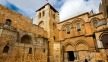
The Church of the Holy Sepulchre, built on the traditional site of Christ's crucifixion, has been closed for several weeks and it is not certain that it will re-open over Easter.
The cardinal added, “Easter, which we celebrate in the name of Christ's passion, death, and resurrection, reminds us that no darkness, not even that of war, can have the last word. The empty tomb is the seal of the victory of life over hatred, of mercy over sin. Let us allow this certainty to illuminate our steps and sustain our hope.”
Israeli authorities have in the past been criticised for imposing stringent restrictions on Christians, particularly those from the Palestinian community, attending religious events.
Historically Israel would allow Christians from the West Bank to attend Easter events in Jerusalem. Last year however Israel issued just 4,000 permits for Palestinian Christians wishing to attend Easter events.
Many of these permits went to church leaders rather than lay believers. The permits also stipulated that the holder could not stay overnight in Jerusalem, effectively preventing many from attending due to long travel distances compounded by Israeli military checkpoints.
In a report issued by church leaders in the Holy Land last year, it was noted that while Christians and Christian events faced these restrictions, Jews wishing to enter Jerusalem for Passover events faced no obstacles.